British colonization of the Americas

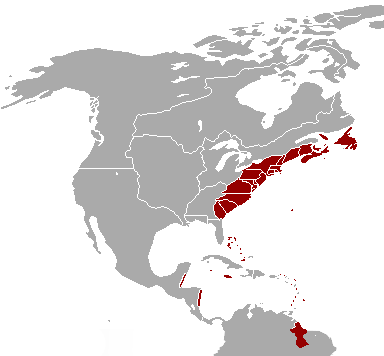
Colonies were established in North America, Central America, South America, and the Caribbean, and although most eventually gained independence, some remain as British Overseas Territories.
- field
- Colonial history
- nationality
- English, Scottish, British
- known_for
- Establishing colonies in the Americas from the late 16th century onward
Lore & Background
During the 17th and 18th centuries, several other English colonies were established in North America, and the Hudson's Bay Company established Rupert's Land. England also captured the Dutch colony of New Netherland and established or conquered colonies in the Caribbean, including Barbados and Jamaica.
Reader's Guide
The British colonization of the Americas was a significant historical process that established permanent English-speaking settlements across the continents. However, Britain continued colonizing parts of the Americas in the 19th century, taking control of British Columbia, the Falkland Islands, and British Honduras, and gaining Trinidad and British Guiana after the Napoleonic Wars. In the mid-19th century, Britain granted self-government to remaining North American colonies, most joining Canada in the 1860s or 1870s. Many former colonies are part of the Commonwealth of Nations.
Did You Know?
- England captured the Dutch colony of New Netherland during the Anglo-Dutch Wars of the mid-17th century.
- Many former British colonies in the Americas are part of the Commonwealth of Nations.
The Debt That Spawned a Colony
The Augsburg-based Welser banking family served as financiers to the Habsburg dynasty, and their relationship with Emperor Charles V was rooted in personal obligation. When Charles V needed funding for his imperial election as Holy Roman Emperor, the Welsers extended credit that he could not immediately repay. In 1528, the emperor settled this debt not in coin but in colonial rights, issuing a charter that granted the Welser family the authority to explore, govern, and colonize a stretch of South American coastline. The venture, known as Klein-Venedig or 'Little Venice,' carried a romantic name that would later give rise to the very word 'Venezuela.' The primary driving force behind the enterprise was the search for El Dorado, the legendary city of gold that had captivated European imaginations. Ambrosius Ehinger was the initial leader of the expedition and in 1529 he established the settlement of Maracaibo, planting the first permanent German foothold on the American mainland. The colony operated under a dual mandate: commercial exploitation and the pursuit of mythical wealth, a combination that would prove both ambitious and ultimately unsustainable.
A Chain of Command and a Fatal Betrayal
The leadership of Klein-Venedig passed through a succession of figures whose tenures were marked by exploration, death, and political conflict. After Ehinger's death in 1533, Nikolaus Federmann and Georg von Speyer, who died in 1540, took the helm, pushing exploration deeper into the interior. Philipp von Hutten ultimately assumed command, but his prolonged absence from the provincial capital, Santa Ana de Coro, created a power vacuum. The Spanish crown seized the opportunity, and Emperor Charles V nominated the Spaniard Juan de Carvajal as governor. Carvajal attempted to assert Spanish authority over the province and in 1545 founded El Tocuyo using German colonists from Coro. When Hutten returned to Santa Ana de Coro in 1546, Carvajal had him and Bartholomeus VI Welser executed for refusing to surrender control of the colony. The killing was ruled an illegal execution, and Spanish crown forces subsequently tried and executed Carvajal himself. In the aftermath, Charles V revoked the Welser charter entirely, ending the German colonial experiment.
Miners, Slaves, and the Toll of the Tropics
The Welser colony was not merely a political venture but a labor-intensive economic operation. The Augsburg bankers transported German miners to the New World, bringing with them skills and expectations that would prove ill-suited to the tropical environment. Alongside these European settlers, approximately 4,000 African slaves were shipped to the colony to work sugar cane plantations, embedding the enterprise within the broader Atlantic slave trade from its earliest days. The human cost was devastating. Many of the German colonists perished from tropical diseases to which they possessed no natural immunity, a vulnerability that turned the lush landscape into a lethal environment. Beyond disease, the colony faced persistent warfare with Native American peoples, adding a second layer of mortality to an already fragile population. The combination of unfamiliar pathogens, armed conflict, and the grueling demands of plantation labor meant that the colony's demographic base was constantly eroding. The Welsers' investment in human capital was, in practical terms, a continuous hemorrhage of lives, and the colony's inability to sustain a stable population undermined every other ambition the charter had set out to achieve.
A Broader German Colonial Pattern
The Welser venture in Venezuela was not an isolated episode but part of a wider pattern of German-speaking colonial ambition in the sixteenth and seventeenth centuries. The Brandenburgisch-Africanische Compagnie, representing the future Kingdom of Prussia, leased a trading post on St. Thomas from the Danish West India-Guinea Company in 1685. In 1693, the Danes seized the post, its warehouse, and all stored goods without warning or any form of repayment, and no permanent German settlers ever took root there. The Duchy of Courland, a German-led vassal state under the Polish-Lithuanian Commonwealth, leased New Courland on Tobago from the English, though the colony repeatedly failed and was restored. A final Courish attempt placed a settlement near modern Toco on Trinidad. Meanwhile, the counties of Hanau-Lichtenberg and Hanau-Münzenberg, under Frederick Casimir and his adviser Johann Becher, funded an extravagant but ultimately incomplete program to lease Guiana from the Dutch West India Company, dubbing it the Hanauish-Indies. Casimir's ambitions generated such enormous debts that he was forced into a regency by his own relatives. Each of these ventures, like the Welser colony, ended in failure or abandonment.
Gallery
Frequently Asked Questions
What is British colonization of the Americas?
It refers to the period of colonial history during which English, Scottish, and later British settlers established and governed territories across the Americas. The process began in the late 16th century and expanded over several centuries into a vast imperial network.
Where did the British set up colonies in the Americas?
British colonial holdings stretched across North America, Central America, South America, and the Caribbean. This geographic spread made the British colonial presence one of the broadest in the hemisphere.
When did British colonization of the Americas begin?
The first sustained British colonial efforts in the Americas date to the late 1500s. From that starting point, settlement and imperial expansion continued steadily through the 17th, 18th, and 19th centuries.
What happened to the British colonies in the Americas?
The majority of these territories eventually won independence, breaking away from British rule. A smaller number, however, persist to this day as British Overseas Territories still linked to the Crown.
Why is British colonization of the Americas considered significant?
It reshaped the political, linguistic, and economic landscape of an entire hemisphere, leaving institutions and cultural norms that still influence modern nations. Its legacy is visible everywhere from the legal systems of former colonies to the borders drawn during the imperial era.
More in Exploration & Colonization 1-15
Spotted an error? Know more?
This is a living reference — every entry is fact-audited, and reader corrections feed straight into our audit queue. Suggest an edit · See this site's audit record