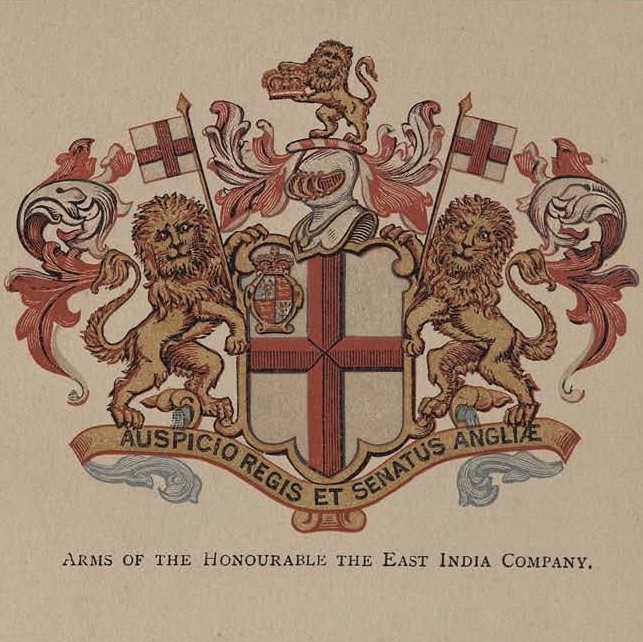
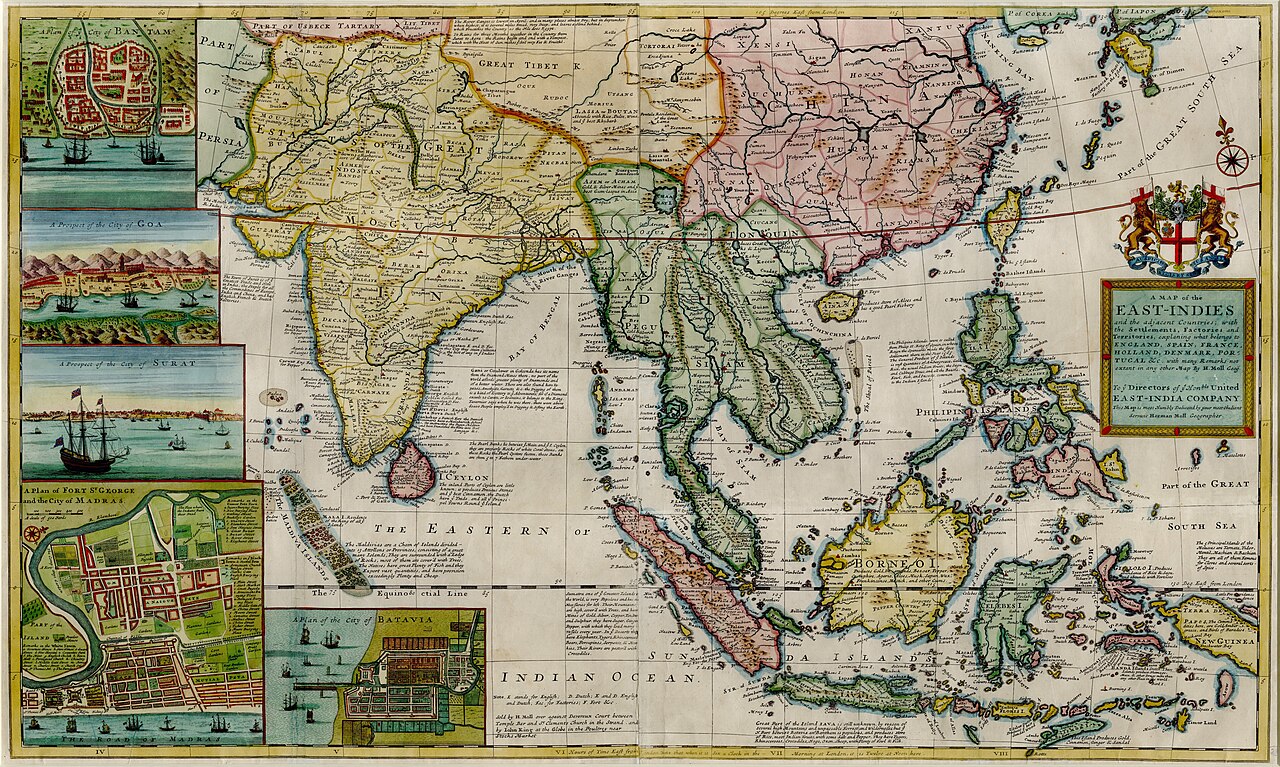
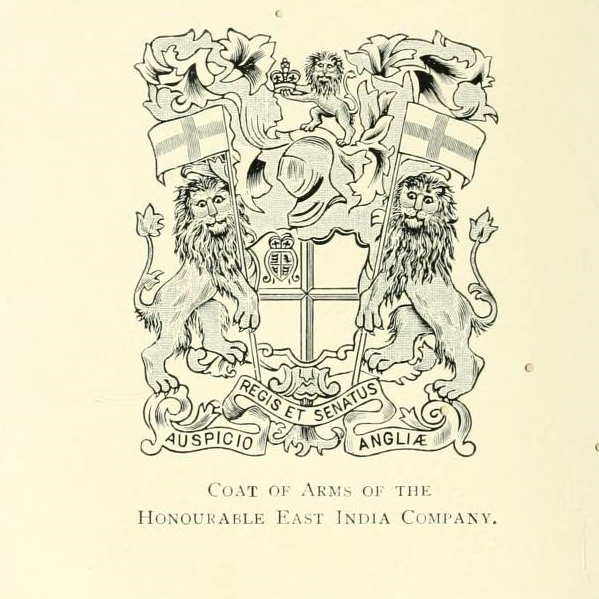
East India Company
Chartered company that ruled India and dominated global trade.

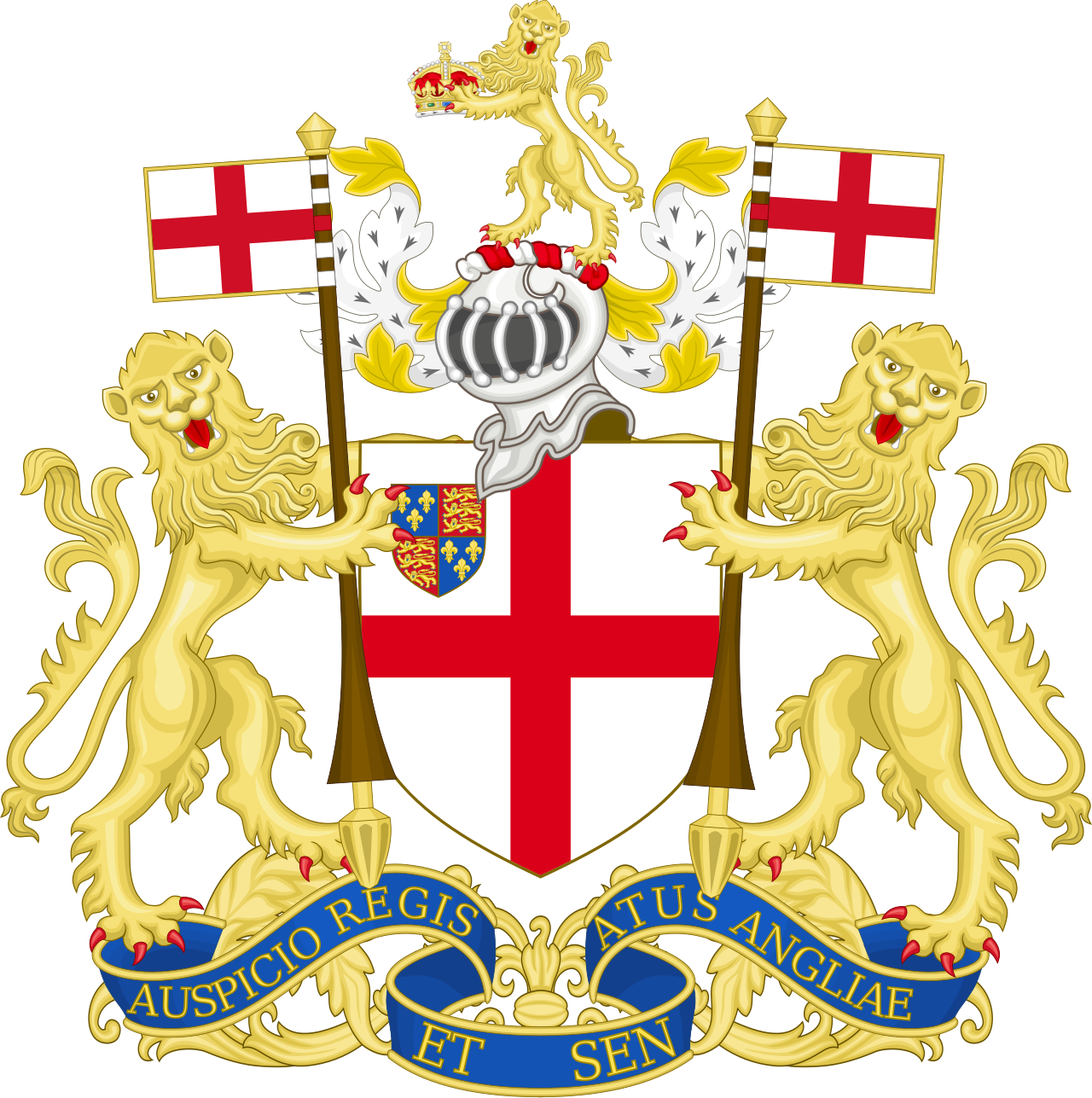
John Bruce · Public domain
- field
- Trade, colonial administration
- nationality
- English, later British
- known_for
- Controlling half of world trade in the mid-1700s and early 1800s; ruling large areas of the Indian subcontinent; initiating the British Raj
Lore & Background
The East India Company originated from late 16th-century English expeditions to the East Indies.
Reader's Guide
The East India Company's significance lies in its transformation from a trading enterprise into a territorial ruler. Its legacy includes the establishment of British colonial rule in South Asia and the integration of global trade networks.
Did You Know?
- The company accounted for half of the world's trade during the mid-1700s and early 1800s.
- The Great Bengal Famine of 1770, resulting from company policies, caused the starvation of 10 million people.
- The company was originally chartered as the 'Governor and Company of Merchants of London Trading into the East-Indies'.
Ancient Voyages and the Shaping of Africa's Image
The Phoenicians were among the earliest to push beyond the familiar Mediterranean, founding colonies along North Africa's coast, with Carthage standing as their most significant outpost. Carthage itself then pushed further, sending explorers toward West Africa. One of the most remarkable claims from this era is the alleged circumnavigation of the entire continent by Phoenician sailors around 600 BC, commissioned by Egyptian pharaoh Necho II. According to Herodotus, the voyage took three years, with the crew pausing annually to plant and harvest crops. Herodotus himself expressed doubt, largely because the sailors reported finding the sun to their north while sailing along Africa's southern coast—a detail he found impossible given his belief in a flat Earth. Some later scholars have actually used that very detail as evidence the voyage was real. Other early explorers include Euthymenes of Massalia, who charted the West African coast in the early sixth century BC, and Hanno the Navigator, whose Periplus from around 500 BC describes a voyage whose southern terminus remains debated, ranging from southern Morocco to as far as Gabon.
Medieval Curiosity and the Search for India
Between the fade of classical geographic knowledge and the dawn of the Age of Discovery, European engagement with Africa was sporadic yet revealing. A Viking fleet of sixty-two ships under Hastein and Björn Ironside raided the Mediterranean and North African coasts between 859 and 861. In the twelfth century, Roger II of Sicily briefly established a Kingdom of Africa between 1146 and 1148. The most ambitious medieval European attempt to reach India by sea came in 1291, when Genoese brothers Vandino and Ugolino Vivaldi set out to round Africa but vanished without a trace. Their disappearance may have prompted fellow Genoese Lancelotto Malocello to discover the Canary Islands around 1312, with the island of Lanzarote bearing his name. In 1346, Mallorcan navigator Jaume Ferrer sailed down the West African coast seeking the legendary River of Gold, though his fate remains unknown. These scattered efforts underscored a persistent European fascination with Africa's southern reaches and the promise of a sea route to the Indies, even as practical knowledge of the continent's interior remained virtually nonexistent.
Portuguese Pioneers and the Limits of Coastal Contact
The systematic European exploration of Africa truly began in the fifteenth century under the direction of Prince Henry the Navigator of Portugal, who from his base in the Algarve region organized a series of expeditions aimed at rounding the continent and reaching India. His most consequential achievement came on 12 March 1488, when Bartolomeu Dias reached the Cape of Good Hope, opening the critical sea route to India and the Far East. Yet despite this breakthrough, European penetration into Africa itself during the sixteenth and seventeenth centuries remained remarkably shallow. The major powers were far more invested in colonizing the New World and were content to maintain trading posts along the African coast. The interior of the continent was largely left to Muslim slave traders, who, working in tandem with the Muslim conquest of Sudan, built extensive trade networks and sustained the economies of several Sahelian kingdoms from the fifteenth through the eighteenth centuries. This division of labor—European coastal commerce versus Muslim inland networks—shaped the continent's economic and political landscape for centuries.
Filling the Blank: The Nineteenth-Century Push into the Heart
At the start of the nineteenth century, European maps of sub-Saharan Africa's interior were still largely empty. It was not until the 1830s and 1840s that expeditions into Southern Africa began to close some of these gaps. By the mid-nineteenth century, as the colonial Scramble for Africa was beginning, the unexplored regions had narrowed to what would become the Congo Basin and the African Great Lakes. This Heart of Africa stood as one of the last great blank spaces on world maps, alongside the Arctic, the Antarctic, and the Amazon's interior. It fell to a generation of nineteenth-century European explorers—John Hanning Speke, Richard Francis Burton, David Livingstone, and Henry Morton Stanley, many of them driven by the quest to find the Nile's sources—to complete the continent's general mapping by the 1870s. After that broad outline was established, further expeditions from the 1880s onward, notably those led by Oskar Lenz, turned their attention to finer details such as Africa's geological composition, transforming a rough sketch into a more precise scientific understanding.
Gallery


Frequently Asked Questions
Who is the East India Company?
The East India Company was a chartered English trading corporation that grew into a de facto colonial government over vast stretches of the Indian subcontinent. It operated under a royal charter and ultimately became the principal vehicle through which Britain administered India.
What were the East India Company's main powers and role?
The company held the right to negotiate treaties, field its own armies, and levy taxes across the territories it governed. Beyond administration, it monopolized enormous swaths of global commerce, at its peak handling roughly half of all world trade between the mid-1700s and early 1800s.
How does the East India Company's story end?
Following the 1857 Indian Rebellion, the British Parliament stripped the company of its governing authority and transferred direct rule to the Crown. The corporation was formally dissolved in 1874 after its remaining commercial operations were wound down.
Why is the East India Company important in exploration and colonization history?
It stands as one of the clearest examples of a private corporation exercising sovereign power on a continental scale, bridging mercantile exploration and formal state colonization. Its legacy includes initiating the British Raj and reshaping the political, economic, and cultural landscape of South Asia for generations.
How did the East India Company begin?
It was founded in 1600 with a royal charter granting it exclusive trading rights to the East Indies, initially focused on spices. Over the following decades its center of gravity shifted to the Indian coast, where it established trading factories that gradually expanded into territorial control.
More in Exploration & Colonization 1-15
Related in Exploration & Colonization
Links follow this subject's own source article.
Spotted an error? Know more?
This is a living reference — every entry is fact-audited, and reader corrections feed straight into our audit queue. Suggest an edit · See this site's audit record