
French colonial empire
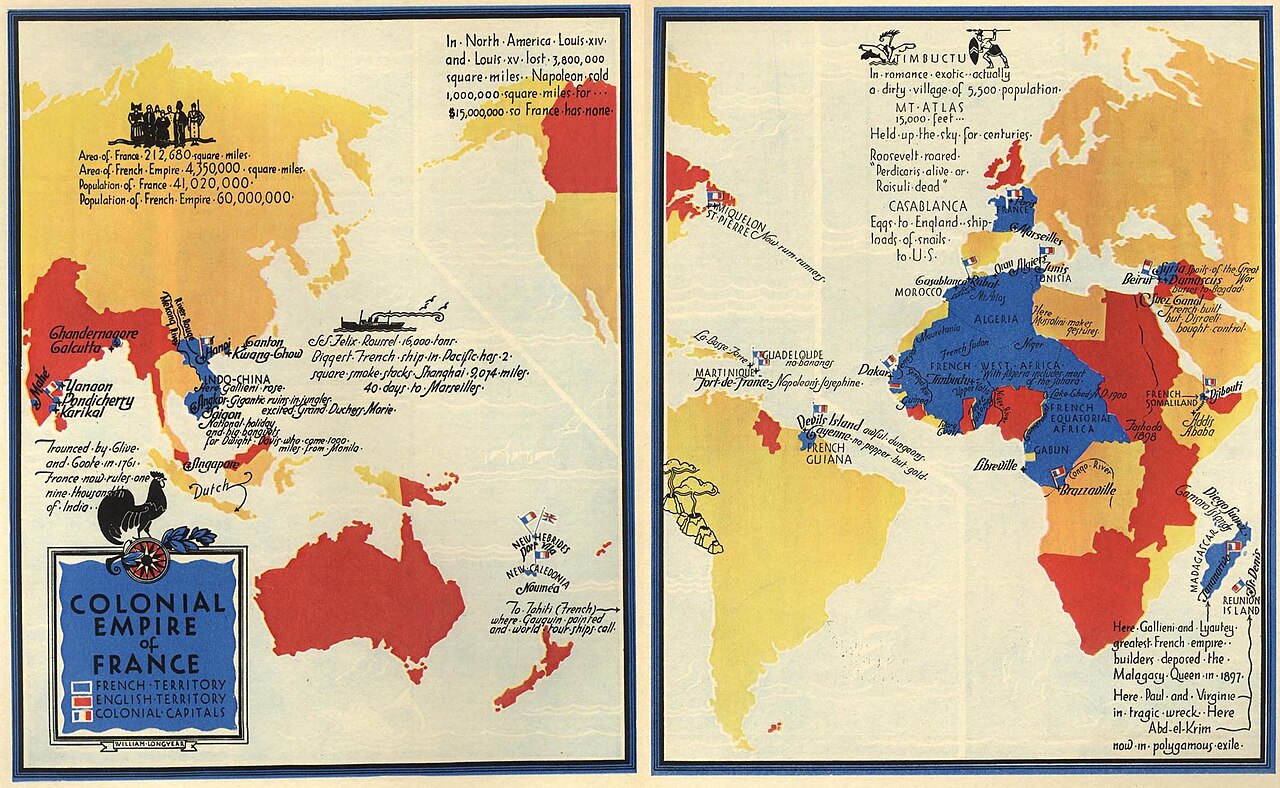
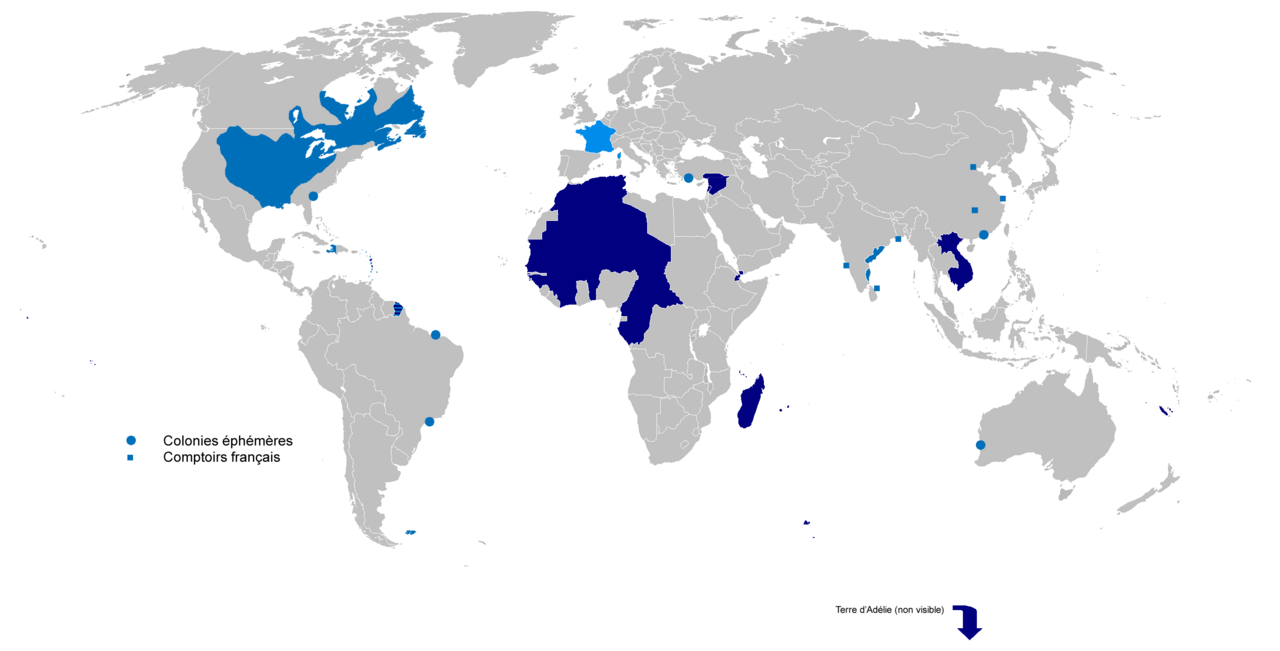
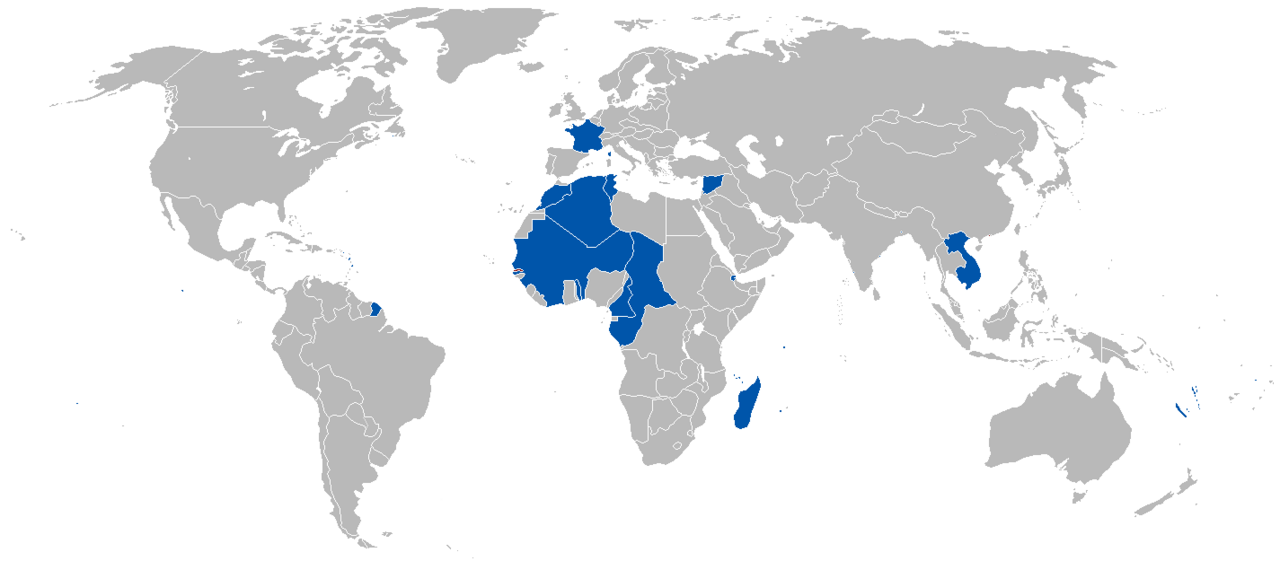
Overseas colonies, protectorates, and mandates under French rule.

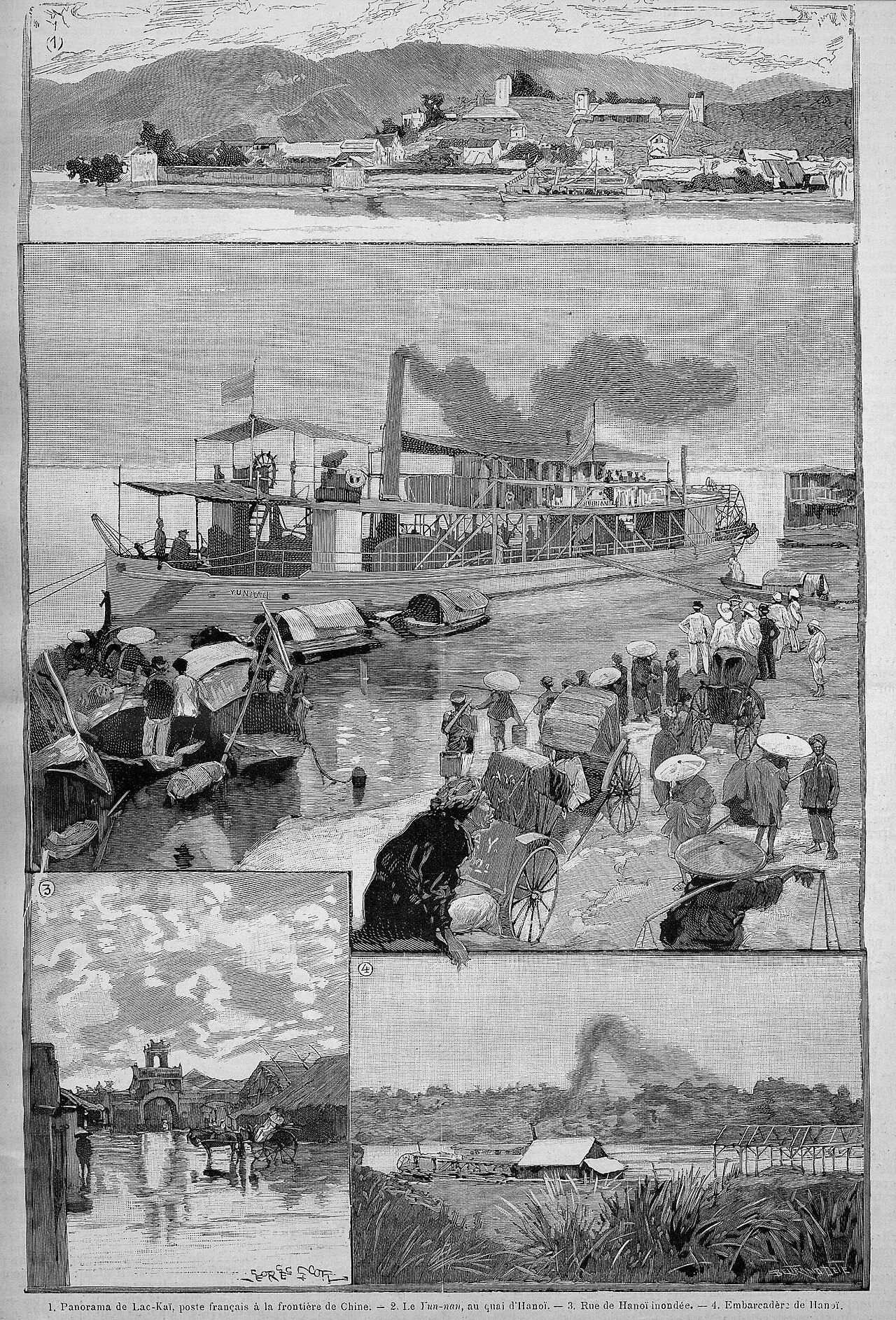
M. G. Scott · Public domain
The French colonial empire comprised the overseas colonies, protectorates, and mandate territories under French rule from the 16th century onward. On the eve of World War I, it was the second-largest colonial empire in the world after the British Empire.
- Peak ranking
- Second-largest after British Empire (pre-WWI)
- Key ideological foundation
- Mission civilisatrice (civilizing mission)
- Notable loss
- Most possessions after Seven Years' War
Lore & Background
France began establishing colonies in the Americas, the Caribbean, and India in the 16th century but lost most after the Seven Years' War. After the Franco-Prussian War, acquiring colonies was seen as a way to restore French prestige and provide manpower during the world wars.
Reader's Guide
The French colonial empire's significance lies in its long duration, global reach, and ideological underpinning of the Mission civilisatrice, which aimed to spread French language, institutions, and values. This vision was contested by figures like Georges Leygues, who rejected assimilation policies for populations with long histories of brilliant civilizations. In practice, colonial subjects were governed under unequal legal systems and rarely granted full citizenship. Relatively peaceful decolonization occurred elsewhere after 1960. Remnants were integrated as overseas departments and territories, and links persist through La francophonie, the CFA franc, and joint military operations. The empire generated both collaboration and resistance, with many future anti-colonial leaders educated in France drawing on republican ideals to challenge colonial rule.
France Among the Great Colonial Powers
France is consistently named alongside the United Kingdom, Spain, Portugal, Italy, the Netherlands, Germany, and Belgium as one of the European nations most remembered for building colonial empires in the modern era. This grouping places France firmly within the tradition of states that engaged in colonization, established or maintained colonies, and infused their territories with forms of coloniality and colonialism. Unlike the earlier maritime powers of Portugal and Spain, which first emerged in the 15th century during a race of exploration, France belongs to the wave of subsequent colonial empires that followed the English and Dutch. The fact that France is remembered in this specific constellation of powers speaks to the scale and duration of its imperial project, even though the detailed territorial listings in the available record focus more heavily on the British and Belgian empires. France's inclusion in this canonical list reflects a shared European trajectory of expansion driven by competition, trade ambitions, and the broader currents of Renaissance capitalism that reshaped global politics.
The Engines of European Expansion
The colonial project in which France participated was not born in a vacuum. The initial impulse behind dispersed maritime empires was trade, energized by the new ideas and capitalism that grew out of the European Renaissance. A critical geopolitical catalyst was the rapid rise of the Ottoman Empire in the 14th century, which forced Iberian powers to seek new trade routes to India and, to a lesser extent, China. This competition between European Christians and Ottoman Muslims fundamentally shaped the direction of European imperialism. Agreements were struck to partition the world between the leading powers in 1479, 1493, and 1494, establishing a framework of division that later empires, including France, would navigate. The colonial state, as defined by scholars, is one that engages in colonization and maintains colonies infused with coloniality. For France and its peers, this meant expanding both contiguously and overseas, sometimes establishing settler colonies, all within a system of global competition set in motion by the earliest maritime explorers.
From Ancient Outposts to Modern Empires
The concept of colonial empire did not originate with European powers. In classical antiquity, the Phoenicians and ancient Greeks settled numerous islands and coastlines around the Mediterranean Sea. However, these early colonies were politically independent from their parent city-states, meaning they did not constitute a true colonial empire in the modern sense. The paradigm shifted decisively with the Ptolemaic, Seleucid, and Roman Empires, which conquered and colonized territories across Europe, North Africa, and West Asia under centralized authority. This distinction between independent outposts and territorially integrated empires is crucial for understanding where France fits in the long arc of colonial history. The modern European colonial empires, including France's, represent a fundamentally different model from these ancient precedents. They were built on maritime technology, global trade networks, and the capitalist structures of the Renaissance, rather than on contiguous territorial conquest. France, as part of the subsequent wave of colonial powers, inherited and transformed this older tradition into a system of overseas dominion that reshaped the political map of the world.
France in the Age of Imperial Competition
France's colonial ambitions unfolded within an era of intense rivalry among European powers. After the initial dominance of Portugal and Spain, the English, Dutch, and French empires emerged as subsequent colonial powers, each carving out territories across the globe. The 19th and early 20th centuries saw the British Empire expand to become the largest in history, ruling over a quarter of the Earth's land area and twenty-four percent of its population, ushering in a period of British Peace that lasted from the end of the French Revolutionary and Napoleonic Wars until the start of World War I. This framing is significant: the French Revolutionary and Napoleonic Wars mark a pivotal boundary in the timeline of European imperialism, separating the older colonial order from the New Imperialism era. During that later phase, Belgium, Italy, and Germany also built their colonial empires in Africa, while Japan encroached into former Chinese domains. France, positioned between these waves, navigated a complex landscape of shifting alliances, territorial disputes, and the constant pressure of competing for influence in a world being divided among European and increasingly non-European powers.
Gallery
Frequently Asked Questions
What was the French colonial empire?
It was the sprawling set of overseas territories, protectorates, and mandate regions placed under French authority beginning in the 1500s. At its height just before World War I, it stood as the second-greatest colonial holding on the planet, behind only the British Empire.
How did the French colonial empire rank globally?
On the eve of the First World War it held the number-two position in total colonial territory worldwide, sitting just behind the British Empire.
What ideology justified French colonial rule?
French policymakers leaned heavily on the notion of a civilizing mission, framing the extension of French law, language, and culture to colonized peoples as a moral duty rather than simple conquest.
What was the single biggest blow to the French colonial empire?
The Seven Years' War proved catastrophic, stripping France of the majority of its overseas possessions and permanently reshaping the global balance of colonial power.
What kinds of territories made up the French colonial empire?
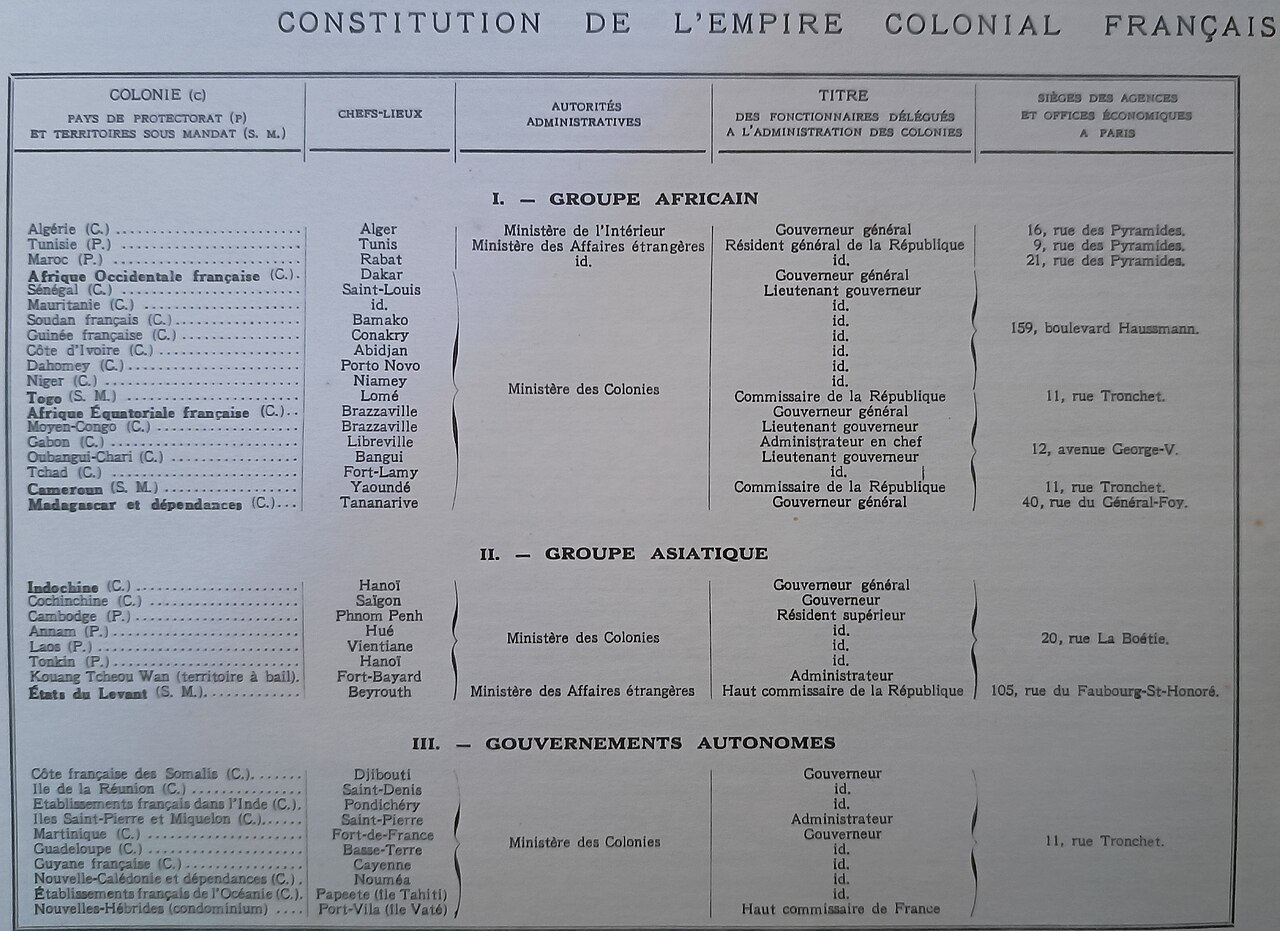
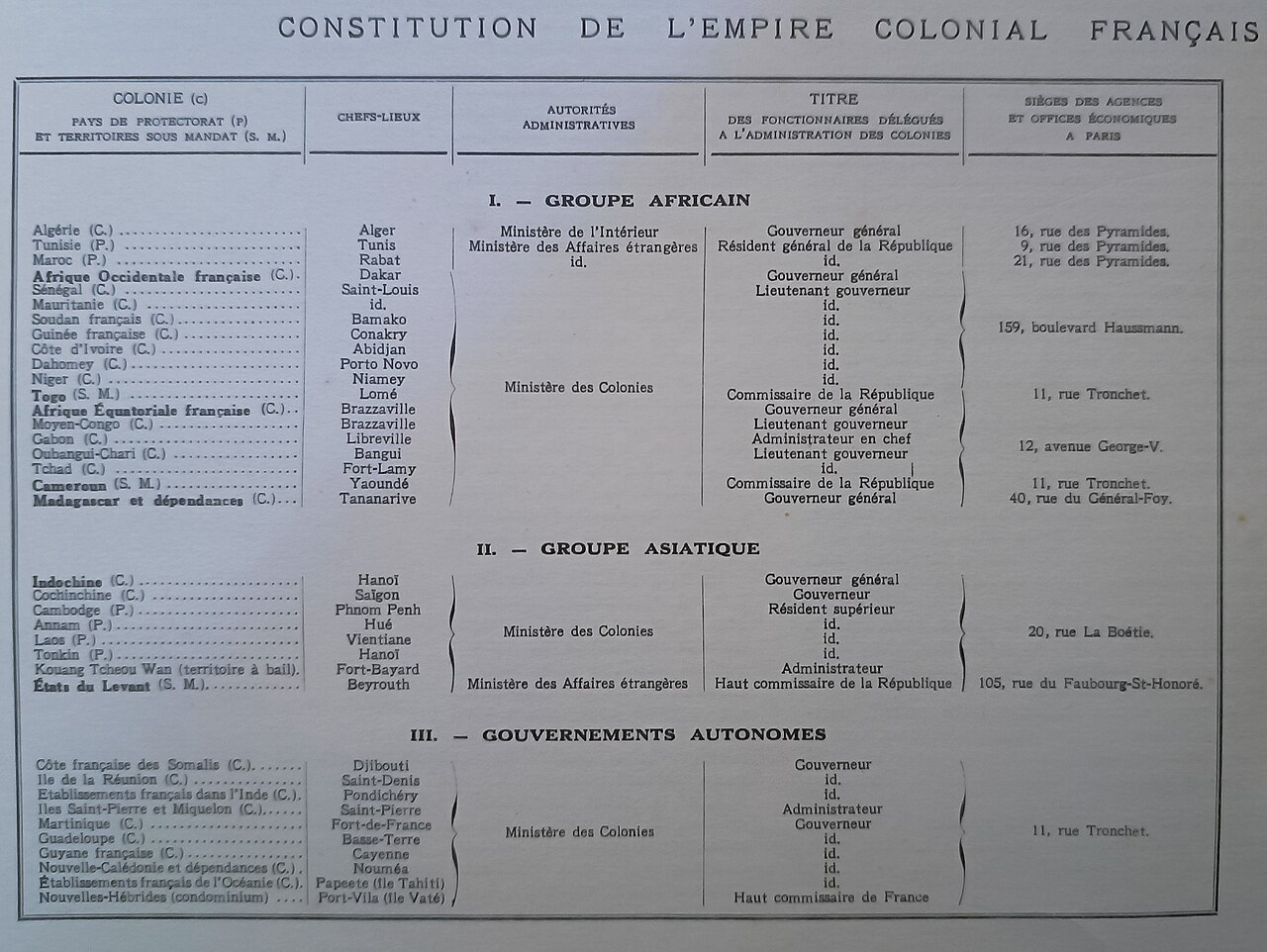
The empire was not a single uniform block; it included outright colonies, protectorates where local rulers retained nominal authority, and mandate territories assigned after the First World War.
More in Exploration & Colonization 1-15
Spotted an error? Know more?
This is a living reference — every entry is fact-audited, and reader corrections feed straight into our audit queue. Suggest an edit · See this site's audit record