Dutch East India Company
Chartered trading company and pioneer of joint-stock finance.

Wikimedia Commons · CC BY 4.0
It is considered one of the first joint-stock companies in the world and, due to its operations across multiple colonies and countries, sometimes the first multinational corporation. The VOC was granted an initial 21-year monopoly on Asian trade, which was renewed multiple times, and possessed quasi-governmental powers, including the ability to wage war, negotiate treaties, and establish colonies.
- field
- Trade and colonization
- nationality
- Dutch Republic
- known_for
- First multinational corporation; spice monopoly; Amsterdam Stock Exchange origins
Lore & Background
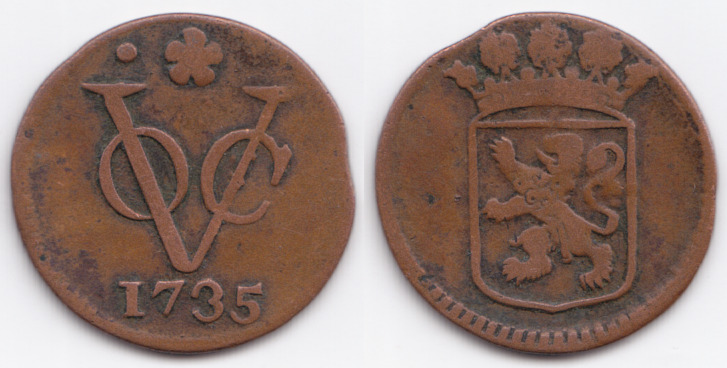
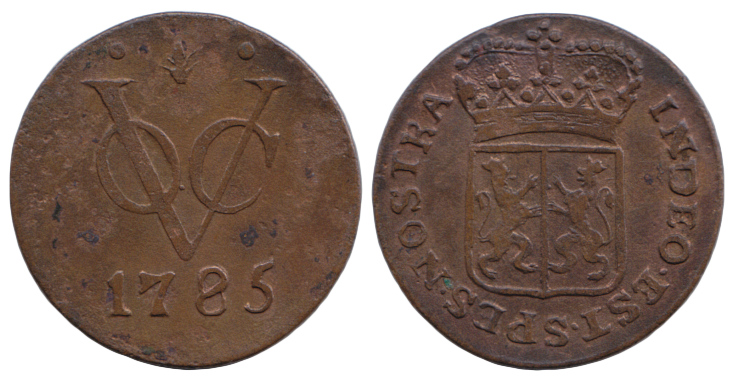
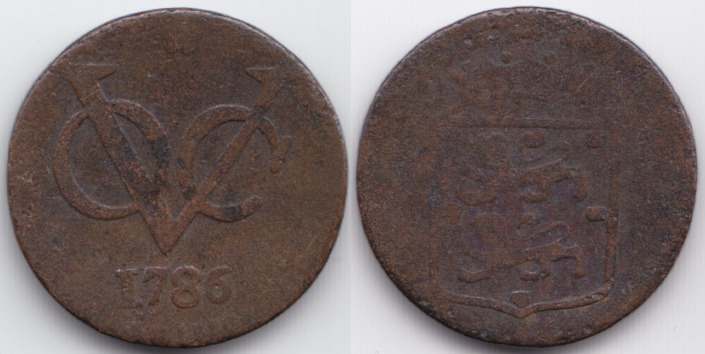
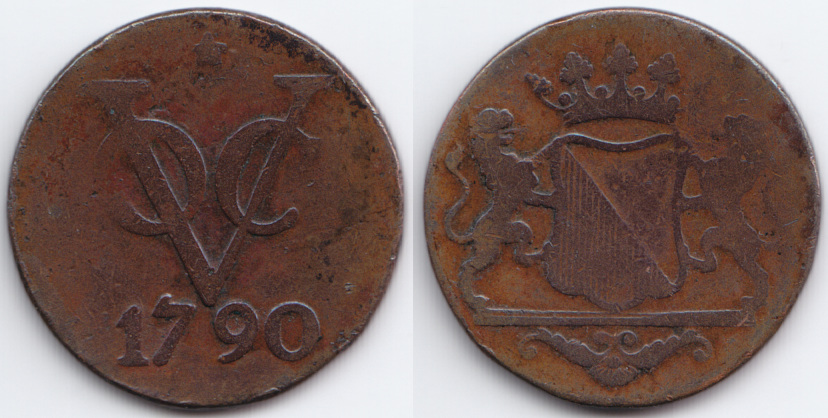
The VOC was formed by amalgamating existing companies to profit from the Malukan spice trade. Over two centuries, it acquired additional ports and territories, dominating Asian trade. Shares could be purchased by any Dutch citizen and traded on open-air secondary markets, one of which became the Amsterdam Stock Exchange. The VOC's monogram logo—a large 'V' with an O and C—is considered the first globally recognized corporate logo. The company paid dividends that fluctuated greatly over its history, with some years yielding no returns and others reaching higher percentages, rather than a consistent annual average of 8–10%. Its possessions and debt were taken over by the Dutch Batavian Republic government.
Reader's Guide
The Dutch East India Company's significance lies in its pioneering role as a joint-stock company and its immense impact on global trade and colonialism. By bundling resources and securing a state monopoly, the VOC reduced risk for investors and created a model for corporate finance that influenced modern capitalism. Its operations reshaped economies in Asia and Europe, particularly through its spice monopoly, which generated huge profits but also destroyed local economies in the Spice Islands by forcing down producer prices. The VOC's quasi-governmental powers allowed it to wage war, negotiate treaties, and establish colonies, effectively acting as a state within a state. Its legacy includes the foundation of the Amsterdam Stock Exchange, the development of corporate branding, and the establishment of Dutch colonial presence in Indonesia. However, its eventual collapse due to corruption and administrative inefficiency highlights the challenges of managing vast, monopolistic enterprises. The VOC remains a key subject in studies of early modern globalization, corporate history, and colonial exploitation.
Did You Know?
- The VOC's monogram logo is possibly the first globally recognized corporate logo.
- Shares in the VOC could be bought by any Dutch citizen and traded on open-air markets, one of which became the Amsterdam Stock Exchange.
- The VOC's dividends fluctuated greatly over its history, with many years of no dividends or much lower returns, rather than a consistent 8–10% annual average.
The VOC's Charter and the Search for a Passage
In 1602, the Republic of the Seven United Netherlands granted a charter to the young Dutch East India Company, tasking it with exploring North America's rivers and bays in search of a direct waterway to the Indies. Explorers were also instructed to claim any uncharted territories for the United Provinces. By 1610, the VOC had already commissioned English navigator Henry Hudson, who, while attempting to locate the Northwest Passage, sailed into Upper New York Bay and up the river that now bears his name, claiming parts of present-day United States and Canada for the company. In 1614, Adriaen Block led an expedition down the lower Hudson aboard the Tyger and then explored the East River in the Onrust, becoming the first known European to navigate the Hellegat into Long Island Sound. Upon returning to Amsterdam, Block compiled a map and applied the name New Netherland to the stretch between English Virginia and French Canada, earning exclusive trading rights and becoming Manhattan's first monopolist.
From Trading Post to Province
The Dutch presence in the Americas began modestly. In 1615, Fort Nassau was established on Castle Island along the Hudson near present-day Albany, serving primarily as a fur-trading outpost with the Lenape people before being replaced by Fort Orange. In 1621, the United Provinces chartered the Dutch West India Company as a trading monopoly for the Americas and West Africa, and a second Fort Nassau appeared on the Delaware River near Gloucester City. The first shiploads of colonists, mostly Walloons and their bound servants, arrived in 1624, landing at Governors Island and being dispersed to Fort Orange, Fort Wilhelmus, and Kievits Hoek. In 1626, Director Peter Minuit purchased Manhattan from the Lenape and began constructing Fort Amsterdam, which grew into the colony's main port and capital, New Amsterdam. The settlement expanded to Pavonia, Brooklyn, the Bronx, and Long Island. By 1633, Fort Huys de Goede Hoop was completed on the Connecticut River at present-day Hartford, though English settlers from Newtown soon moved onto the Little River's north bank, and the Treaty of Hartford eventually retracted New Netherland's border to western Connecticut.
The Anglo-Dutch Struggle for New Netherland
In 1664, an English naval expedition entered the harbor at New Amsterdam, and Director-General Peter Stuyvesant, vastly outnumbered, surrendered after negotiating favorable terms of capitulation. The province was renamed New York after Prince James's English title, while Fort Orange became Fort Albany from his Scottish title, and the territory between the lower Hudson and the Delaware was deeded to proprietors as New Jersey. This loss ignited the Second Anglo-Dutch War of 1665 to 1667, which concluded with the Treaty of Breda: the Dutch formally relinquished their claim to New Netherland in exchange for retaining Suriname. During the Third Anglo-Dutch War, Dutch forces briefly recaptured the territory from 1673 to 1674, but the Treaty of Westminster returned it to England. In 1674, Dutch captain Jurriaen Aernoutsz also seized two forts in the French colony of Acadia, naming the claim New Holland. However, his appointed administrator John Rhoades quickly lost control after Aernoutsz departed for Curaçao to recruit settlers, leaving Dutch sovereignty over Acadia existing only on paper until the Treaties of Nijmegen saw the Netherlands surrender the claim entirely.
A Long and Uneven Legacy
Dutch colonization in the Americas followed a markedly different pattern from that of other European powers. Rather than mass settlement, the Dutch relied heavily on trading posts and plantations, with actual colonization by Dutch settlers being comparatively rare. The earliest Dutch forts and settlements along the Essequibo River in Guyana date to the 1590s, predating the first Dutch fort in Asia, which was not built until 1600 in present-day Indonesia. In 1614, the States General issued a General Charter inviting all inhabitants of the United Netherlands to participate freely in the search for new passages and commercial opportunities, marking a departure from purely monopolistic endeavors. Despite these early efforts, many Dutch settlements were lost or abandoned by the century's end. Yet the Netherlands retained Suriname until it achieved independence in 1975, and the Dutch Caribbean remains part of the Kingdom of the Netherlands today. In the Caribbean, Dutch colonization began with settlements on Tobago in 1628, Tortuga in 1631, and St. Croix in 1634, establishing a foothold that would persist in various forms for centuries.
Gallery
Frequently Asked Questions
Who is Dutch East India Company?
The VOC was a chartered trading enterprise founded in 1602 under the Dutch Republic, organized as a joint-stock company that pooled capital from investors across the Netherlands. It is widely regarded as the world's first multinational corporation, operating trade posts and colonies spanning from the Middle East to Japan.
What are Dutch East India Company's powers/role?
Beyond ordinary commerce, the VOC held quasi-sovereign authority granted by the States General, allowing it to wage war, sign treaties with local rulers, and administer colonies. This blend of corporate and governmental power let it function almost as a state within a state across its Asian territories.
How does Dutch East India Company's story end?
After decades of mounting debt, internal corruption, and declining trade volumes, the VOC was formally dissolved in 1799 and its remaining assets were absorbed by the Dutch government. Its colonies and trade routes were subsequently reorganized under direct state control.
Why is Dutch East India Company important?
The VOC pioneered modern joint-stock finance and is credited with laying the groundwork for the Amsterdam Stock Exchange, fundamentally reshaping how corporations raise capital. Its repeated monopoly on Asian spice trade also made it a dominant economic force that shaped global commerce for nearly two centuries.
What was Dutch East India Company's spice monopoly?
The VOC received an exclusive 21-year charter to conduct all Dutch trade east of the Cape of Good Hope, effectively granting it sole access to the lucrative spice markets of the East Indies. This exclusive right, renewed multiple times over its existence, generated enormous profits and drove aggressive colonial expansion across the Indonesian archipelago.
More in Exploration & Colonization 1-15
Spotted an error? Know more?
This is a living reference — every entry is fact-audited, and reader corrections feed straight into our audit queue. Suggest an edit · See this site's audit record