European colonization of the Americas
European powers colonized the Americas from the late 1400s to early 1800s.

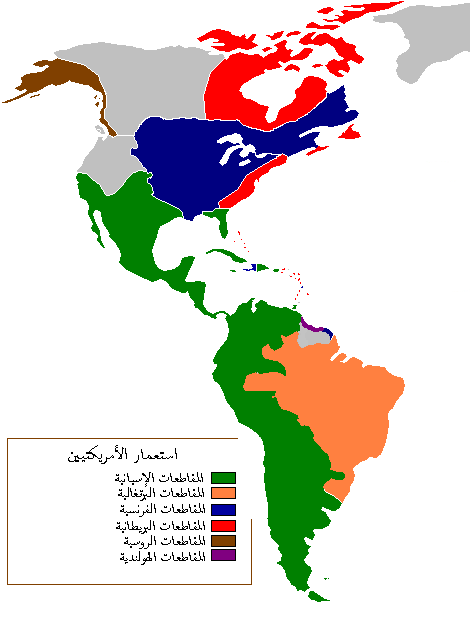
European colonization of the Americas was a large-scale process primarily between the late 15th century and early 19th century, involving Spain, Portugal, Great Britain, France, Russia, the Netherlands, Denmark, and Sweden. It began after Christopher Columbus's voyages and led to the establishment of settler colonial states, the displacement and genocide of Indigenous peoples, and the creation of enduring social structures in the Western Hemisphere.
- Period
- Late 15th century to early 19th century
- Major Powers
- Spain, Portugal, Great Britain, France, Russia, Netherlands, Denmark, Sweden
- Known For
- Settler colonialism, displacement, enslavement, genocide of Indigenous peoples
Lore & Background
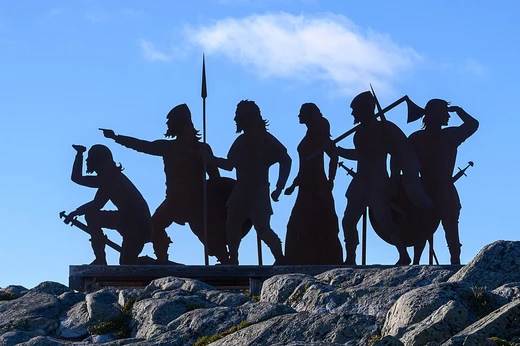
The Norse were the first known Europeans in North America, settling Greenland and a short-term site at L'Anse aux Meadows circa 1000 AD. However, the later colonization after Columbus's voyages is better known. By the 1530s, Britain and France colonized the northeast tip of the Americas. Sweden established New Sweden, the Dutch New Netherland, and Denmark–Norway colonized parts of the Caribbean. In the 1700s, Denmark–Norway revived Greenland colonies, and Russia explored the Pacific Coast from Alaska to California. Violent conflicts arose as Indigenous peoples fought to preserve their territories, and European powers continued settler colonialism into the 1800s, including U.S. policies of Manifest destiny and Indian removal.
Reader's Guide
European colonization of the Americas had profound and lasting significance. It resulted in the establishment of political boundaries, religions, and languages that dominate the Western Hemisphere today. Colonization also involved genocide, as some scholars argue. The legacy includes settler colonial states such as the United States, which continued policies of Manifest destiny and Indian removal. Other regions like California and Patagonia saw little colonization until the 1800s. The process fundamentally reshaped the Americas, with effects still evident in the 21st century.
Did You Know?
- The Norse established a colony in Greenland in the late tenth century that lasted until the mid 15th-century.
- L'Anse aux Meadows in Newfoundland is the only widely accepted site of pre-Columbian trans-oceanic contact.
The Geopolitical Spark: Why Europe Looked West
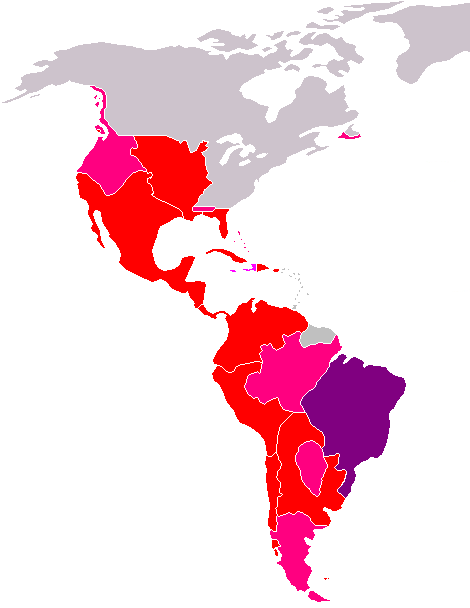
The European push into the Americas was far from inevitable. In the early fifteenth century, Western kingdoms were still mending the demographic scars of the Black Death and waging internal wars, making their later explosive expansion virtually unpredictable. The Ottoman Empire's firm control over the overland trade routes to Asia—routes carrying spices, silks, and porcelains—created an urgent economic pressure that drove monarchs to finance oceanic alternatives. Columbus's 1492 expedition, originally intended to reach East Asia, instead made landfall in the Bahamas, where he encountered the Lucayan people on the island of Guanahani. His reports, which overstated the gold available and included enslaved captives, secured royal backing for a second voyage. The 1494 Treaty of Tordesillas then split the non-Christian world into two hemispheres: Spain received the west, effectively encompassing all of the Americas, while Portugal claimed the east, gaining the eastern bulge of South America where Brazil would take shape in the early 1500s. That single diplomatic act set the template for centuries of competing imperial claims.
The Norse Prelude: Europe's First Foot on the Continent
Long before Columbus's caravels crossed the Atlantic, Norse Viking explorers had already set foot in North America. Their colony in Greenland, established in the late tenth century, endured roughly five centuries and featured court and parliament assemblies at Brattahlíð along with a bishopric at Garðar. The settlement at L'Anse aux Meadows on Newfoundland's northern tip, uncovered in 1960 and carbon-dated to approximately 990–1050, remains the sole widely accepted archaeological proof of pre-Columbian trans-oceanic contact and was designated a UNESCO World Heritage Site in 1978. The site is connected to the attempted colony of Vinland, attributed to Leif Erikson around the same period. According to tradition, Erikson's brother made the first direct contact with the native inhabitants, whom the Norse called skrælings; after capturing and killing eight of them, the Norse were attacked at their beached vessels and forced to defend themselves. The Greenland colony ultimately collapsed by the mid-fifteenth century, leaving no lasting European presence on the continent.
A Cascade of Colonial Ambitions
Spain's head start in the 1490s did not remain unchallenged for long. By the 1530s, other Western European powers recognized the Americas as a source of wealth and prestige, and British and French colonists began staking claims along the northeastern coast of the continent, including territory that would become the United States. Within roughly a century, Sweden founded New Sweden, the Netherlands established New Netherland, and Denmark–Norway, alongside the Swedes and Dutch, extended their reach into Caribbean islands. The map kept expanding: in the eighteenth century, Denmark–Norway reactivated Norway's old Greenland colonies, while Russian explorers pushed southward along the Pacific coast from Alaska to California. The driving motivations varied—material profit, political status, and the spread of Christianity, often compressed into the Spanish triad of gold, glory, and God—but the cumulative effect was a dense patchwork of competing empires whose borders, languages, and religious institutions would shape the Western Hemisphere's social architecture well into the twenty-first century.
Devastation and Enduring Consequences
The human cost of European colonization was staggering and multifaceted. Indigenous communities faced displacement, the dismantling of their societies, enslavement, and outright genocide as settler populations expanded. Violent clashes erupted early on: native peoples fought to defend their territories against both incoming Europeans and rival indigenous groups now armed with European weaponry. These conflicts persisted as a central dynamic across the continent well into the nineteenth century. Even after some regions achieved independence from European rule, settler-colonial policies continued; the United States, for instance, pursued Manifest Destiny and systematic Indian removal. Some areas—California, Patagonia, the North-Western Territory, and the northern Great Plains—saw little European colonization until the 1800s, meaning the disruption arrived later but no less severely. The social structures that dominate the Western Hemisphere today, including dominant religions, political boundaries, and lingua francae, are direct descendants of the frameworks imposed during this era of colonization.
Gallery
Frequently Asked Questions
What is European colonization of the Americas?
It refers to the broad historical process in which multiple European nations established permanent settlements, political control, and economic systems across the Western Hemisphere. The era stretches roughly from the late 1400s through the early 1800s, beginning with Columbus's transatlantic voyages.
Which powers were involved in European colonization of the Americas?
Eight European nations played major roles: Spain, Portugal, Great Britain, France, Russia, the Netherlands, Denmark, and Sweden. Each carved out its own territorial claims and colonial administrations across North and South America.
How does the European colonization of the Americas story end?
The process wound down in the early 19th century as most of the colonies achieved independence or were formally absorbed into new nation-states. By that point, the social, political, and demographic structures it created had already become deeply embedded in the Americas.
Why is European colonization of the Americas important to study?
It fundamentally reshaped the demographics, languages, economies, and political boundaries of the entire Western Hemisphere. The settler-colonial frameworks, systems of enslavement, and Indigenous displacement it produced continue to influence modern societies and ongoing debates over justice and sovereignty.
What is European colonization of the Americas most known for?
It is recognized for establishing large-scale settler colonial states, the systematic displacement and genocide of Indigenous populations, and the institution of transatlantic enslavement. These legacies define the social hierarchies and historical trauma that persist in the region today.
More in Exploration & Colonization 1-15
Spotted an error? Know more?
This is a living reference — every entry is fact-audited, and reader corrections feed straight into our audit queue. Suggest an edit · See this site's audit record